
ニューヨーク・タイムス・オペラ・レビュー
「メフィストフェレ」 1999・11・8 バーナード・ハランド (モイチ訳)
歌手は「メフィストフェレ」で破滅する
ボイトの「メフィストフェレ」が金曜日の夜、メットで採り上げられた理由は、キャスト表の一番上を見れば分かる。サミュエル・レイミーが、今やちょっとした十八番となった主役を務めているからである。
このプロダクション(テイストも修正の具合も芳しくないが)は、12年前のジュネーブ大劇場を皮切りに世界中で彼を追いかけて上演されてきたのである。
ロバート・カーソンとマイケル・レバインの努力によって、この後、持ち回りで公演されるシカゴ、サンフランシスコ、ヒューストンおよびワシントンでは、もっとましで輝かしいものになろうが、とにかく、ここメットでは、まるでしんどいバス・トラック旅行の名残みたいに少し雑になっている。 これは、オペラに飢えた多くのアメリカの地方諸都市が待ちかねている出し物である。 だだ、メットのようなスケールの大きいところでは、「メフィストフェレ」は間違いなく安物である。
レイミーは、いつもどおりの素晴らしい出来である。声量はゆたかで堂々としている。
彼の容貌はいかにも悪魔らしいし、体型も逞しくてちょうどよい。 超現実的な夜の衣装をつけたモデルのようにステージを飛び跳ね、見事な流し目を使う。 レイミーが出ていると、このオペラについて、ひとはさらに訳がわからなくなってしまう。 ゲーテの「ファウスト」に何の疑念もなくはまっているファンは、人間の精神状態の深遠な探求劇が、派手なイタリア風メロドラマになっているのを見てびっくりするだろう。けれども、コーラスが徐々に天上に舞上っていくように歌ってくれ、乱雑で不揃いな書物をきちんとするブックエンドのような役割を果たしてくれれば、だれでも気分を高揚されざるをえないであろう。 また、マルガリータが長調と単調との間を曖昧に引きずるようにして歌う「いつかの夜、海の底に」も同様である。
20世紀まで生きたアリーゴ・ボイトは、ベルディ・オペラの最上の脚本家であったが、同時に彼自身もオペラを作曲したいと切望していた。「メフィストフェレ」は1868年に完成したが、それは彼の自信と不確かさの入り混じったものであった。しかし、その白熱のイタリア魂はけっして冷めなかった。このプロダクションはうまく進行をトーンダウンしているが、逆にその炎を煽っている。その結果、けばけばした色合いと過激で陽気な低俗さを持ったボードビル様の悲劇に仕上がっている。
一部の新衣装は良かったが、お粗末なセット装飾は、最初から計算外であったと思う。ペイントされた赤いカーテンと、かたどりされた天使が飛んでいる様は、ぞっとするし、後方の組み立て式書架は、日のたったウェディング・ケーキをスライスしたように見えた。悪魔たちの角笛は、小ぶりの赤いスーツの上でぱたぱたしていた。白を纏った他方のチームの人たちはもちろん同様の羽根を付けていた。悪魔たちの容貌は、煙と花火のささやかな爆発で強調されていた。より大きなスケールでの邪悪の場面では舞台端からドライアイスの噴出しが使われた。
ワルプルギスの夜の祝祭では、メットのコーラスが年代ものの下着を着けて飛んだり、撥ねたり、押し合ったりしていた。それは、本当のところ憂慮すべき光景であった。私はこれらのネガティブなコメントはするが、この夜の聴衆は、歌手、舞台装置ほかあらゆる点で満足してオペラを楽しんだようである。
リチャード・リーチ(ファウスト)とベロニカ・ベラロエル(マルガリータとトロイのヘレン)は、この大劇場を揺るがすだけの声量をもっていたし、シャイではなかった。ジェーン・シャウリス(マルタ)エドアルド。バルデス(ワグナー)ジル・グローブ(パンタリス)それにバーナード・フィッチ(ネレオ)は、みんな良かった。当夜の指揮者、マーク・エルダ−は、オフステージの歌唱と舞台上の演技とのバランスを取る時間がなかったのか、見えないコーラスがときどき別の種類のインビジブルになりそうであった。コーラスもオーケストラも、それぞれとしてはプロとしていつもどおりよくやったと思うが、両者の間に見られたある種の弛緩・ズレは、「表に出てこない身内の論評」ではすまないのではないだろうか。
A Singer Goes to the Devil in 'Mefistofele'
'Mefistofele' at the Metropolitan Opera
BERNARD HOLLAND
11/08/99
The reason for Boito's "Mefistofele" at the Metropolitan Opera on Friday night could be found at the top of the cast list. Samuel Ramey has made a minor career of the title role, and this production -- questionable in its taste as well as its state of repair --has been following him around the world since its birth at the Grand Theatre de Geneve 12 years ago.
|
|
|
|
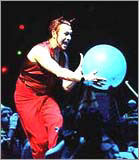
| Samuel Ramey in the title role of 'Mefistofele.' (Sara Krulwich/The New York Times) | |
|
The efforts of Robert Carsen and Michael Levine may have seen better, brighter days at the opera's subsequent stops in Chicago, San Francisco, Houston and Washington, but it arrives here looking a little disheveled, like the remnants of some grueling bus-and-truck tour. This is a show many opera-starved American cities would love to have. For a place as upscale as the Met, "Mefistofele" is decidedly low rent.
Mr. Ramey is his usual wonderful self. The voice is rich and commanding; the profile appropriately devilish and the figure nicely athletic. Modeling a wardrobe of surreal evening clothes, he bounds about the stage and leers splendidly. One is more ambivalent about the opera around him. Unsuspecting fans of Goethe's "Faust" will be surprised to discover profound explorations of the human condition reduced to splashy Italian melodrama, but how could they not be raised up by the soaring, stepwise celestial chorus that serves as bookends for the untidy and uneven materials held between, or for that matter by Margherita's "L'altra notte in fondo al mare" with its ambiguous slitherings between the major and minor modes?
Arrigo Boito, who lived well into the 20th century, served opera well as a writer, being one of Verdi's best librettists. But he aspired to composing as well. "Mefistofele," finished in 1868, is a mixture of self-confidence and uncertainty, but its white-hot Italian heart never cools. The production might wisely have toned down the proceedings but instead fans the flames. The result is tragedy as a kind of vaudeville: garishly colored, hyperactive and cheerfully vulgar.
Some new costumes help, but the seedy state of the sets augments, I am afraid, what were miscalculations in the first place. The painted red curtain and sculptured angels in flight are ghastly. The modular gallery to the rear looks like day-old wedding cake in slices. Devils sport horns flapping atop their little red suits. Members of the other team, in white, of course, bear wing attachments of similar sophistication. Devilish appearances are punctuated by pathetic little bursts of smoke and fireworks; sinister events on a larger scale are introduced by billows of dry ice from the wings.
For the Walpurgis Night celebrations, the Met's chorus has been dressed in vintage underwear and encouraged to prance, bump and grind. It is, believe me, an alarming sight. While saying all of these negative things, I am happy to report that Friday's audience had a wonderful time, cheering both singers, sets and everything else that was going on.
Richard Leech (Faust) and Veronica Villarroel (Margherita and Helen of Troy) have voices big enough to rock this big theater, and they are not shy. Jane Shaulis (Marta), Eduardo Valdes (Wagner), Jill Grove (Pantalis) and Bernard Fitch (Nereo) all did well. Mark Elder, the evening's conductor, may not have had time to balance the offstage singing and playing with what was happening out front, with the result of invisible choruses occasionally reaching near invisibility of another kind. Both chorus and orchestra worked to be their usual professional selves, but I wonder if a certain looseness here was not an unspoken music criticism of its own.
"Mefistofele" returns to the Met
tomorrow night and again on Friday.
オペラ・レビューのページに戻る